
How Manufacturing Quality Affects Aluminium Performance
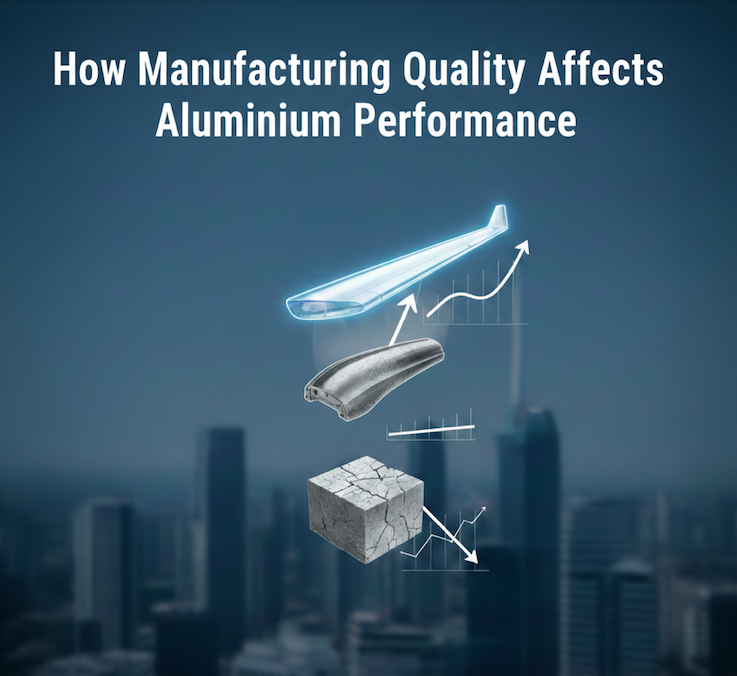
Aluminium is no longer just a building material — it is an engineering choice, a design decision, and a long-term investment. In today’s construction landscape, where performance, aesthetics, and sustainability must work together, aluminium has emerged as a preferred solution for windows, doors, façades, partitions, and structural applications.
However, not all aluminium performs the same. The real differentiator lies in manufacturing quality. The way aluminium is sourced, engineered, extruded, finished, and tested determines how it behaves over time — in real homes, real buildings, and real environments. This is where precision-led manufacturers like KMC Aluminium set themselves apart.
The Starting Point: Pure, Purpose-Driven Raw Material
Performance begins at the very first stage — raw material selection. High-performing aluminium is not accidental; it is designed. The right alloy composition ensures strength, durability, corrosion resistance, and workability, depending on the intended application.
Lower-grade or inconsistent raw material can introduce weaknesses that may not be visible immediately but show up over time in the form of bending, brittleness, or surface degradation. In contrast, carefully selected, high-grade aluminium creates a strong foundation for products that stand the test of time. This focus on material integrity reflects the kind of meticulous approach that KMC Aluminium is known for across its product range.
Precision in Extrusion: Where Strength Takes Shape
The extrusion process is the heart of aluminium manufacturing. Heated aluminium billets are pushed through precision-engineered dies to create specific profile shapes used in windows, doors, structural frames, and industrial systems.
If temperature control, pressure levels, or cooling rates are even slightly off, it can lead to structural inconsistencies such as uneven thickness, internal stress points, or minor deformations. These imperfections may seem small but can affect installation accuracy, load-bearing capacity, and long-term stability.
High-quality manufacturing ensures dimensional accuracy, uniform strength, and smooth structural flow throughout every profile. This is especially critical in architectural applications where precision determines both performance and visual appeal.
Surface Treatment: Beauty That Lasts
Aluminium’s durability is significantly influenced by how it is treated after extrusion. Advanced surface treatments such as powder coating and anodizing do more than enhance appearance — they act as a protective shield.
Superior finishing improves resistance to:
- Corrosion in humid or coastal climates
- UV fading under harsh sunlight
- Scratches and everyday wear
- Chemical exposure and environmental pollutants
Poor-quality finishing, on the other hand, can lead to peeling, discoloration, or early deterioration. A brand that prioritizes high-grade surface treatment ensures that its aluminium retains both its strength and elegance for years — a philosophy embedded in KMC Aluminium’s manufacturing standards.
Thermal Performance: Built for Comfort
As energy efficiency becomes a key priority in modern buildings, the thermal behavior of aluminium systems has gained importance. Poorly manufactured profiles can allow excessive heat transfer, increasing indoor temperatures and energy consumption.
High-quality aluminium manufacturing integrates intelligent design elements such as thermally broken profiles, which reduce heat conduction and improve indoor comfort. This is particularly relevant in India’s climate, where efficient heat management can make a noticeable difference in living and working spaces.
Structural Reliability: Safety You Can Trust
The safety of aluminium products depends heavily on manufacturing precision. Inferior profiles may deform under pressure, compromise structural stability, or fail under extreme conditions.
Well-engineered aluminium delivers:
- Higher tensile strength
- Better resistance to impact and stress
- Enhanced stability for high-rise buildings and large façades
This level of reliability is what makes precision-driven aluminium a preferred choice for architects, builders, and fabricators who value both performance and peace of mind.
Ease of Fabrication and Installation
Manufacturing quality also plays a major role in how smoothly aluminium profiles can be fabricated and installed. Poorly made profiles often lead to misalignment, increased wastage, rework, and project delays.
High-quality aluminium, crafted with consistency and accuracy, ensures:
- Seamless fitting during assembly
- Reduced installation errors
- Better airtight and watertight sealing
- Faster, more efficient project execution
This is why fabricators consistently prefer aluminium systems that are engineered with precision rather than just produced at scale.
Long-Term Value Over Short-Term Cost
While premium aluminium may come at a slightly higher initial price, its long-term benefits far outweigh the upfront difference. Inferior materials may require frequent repairs, repainting, or replacement, leading to higher overall costs.
High-quality aluminium delivers:
- Greater durability
- Minimal maintenance
- Superior resistance to environmental wear
- Higher property value over time
For homeowners, architects, and developers, investing in well-manufactured aluminium is not just a purchase — it is a long-term asset.
Sustainability: Built to Last, Made to Recycle
Aluminium is one of the most recyclable materials in the world, but manufacturing quality further enhances its environmental value. Efficient production reduces waste, conserves energy, and minimizes carbon footprint.
Additionally, high-quality aluminium retains its structural integrity even after multiple recycling cycles, making it one of the most sustainable materials available in modern construction.
Conclusion: Performance is Engineered, Not Assumed
Aluminium performance is shaped not just by its inherent properties but by the excellence behind its manufacturing. From raw material selection to extrusion, finishing, and quality control, every stage plays a crucial role in determining how well aluminium performs in real-world applications.
Manufacturers that prioritize precision, innovation, and consistency — like KMC Aluminium — ensure that their products deliver superior strength, durability, aesthetics, and energy efficiency.
In the end, choosing high-quality aluminium is choosing reliability, performance, and lasting value — qualities that define truly engineered building solutions.

Recent Comments