
5 Hidden Benefits of Aluminium for Indian Architects
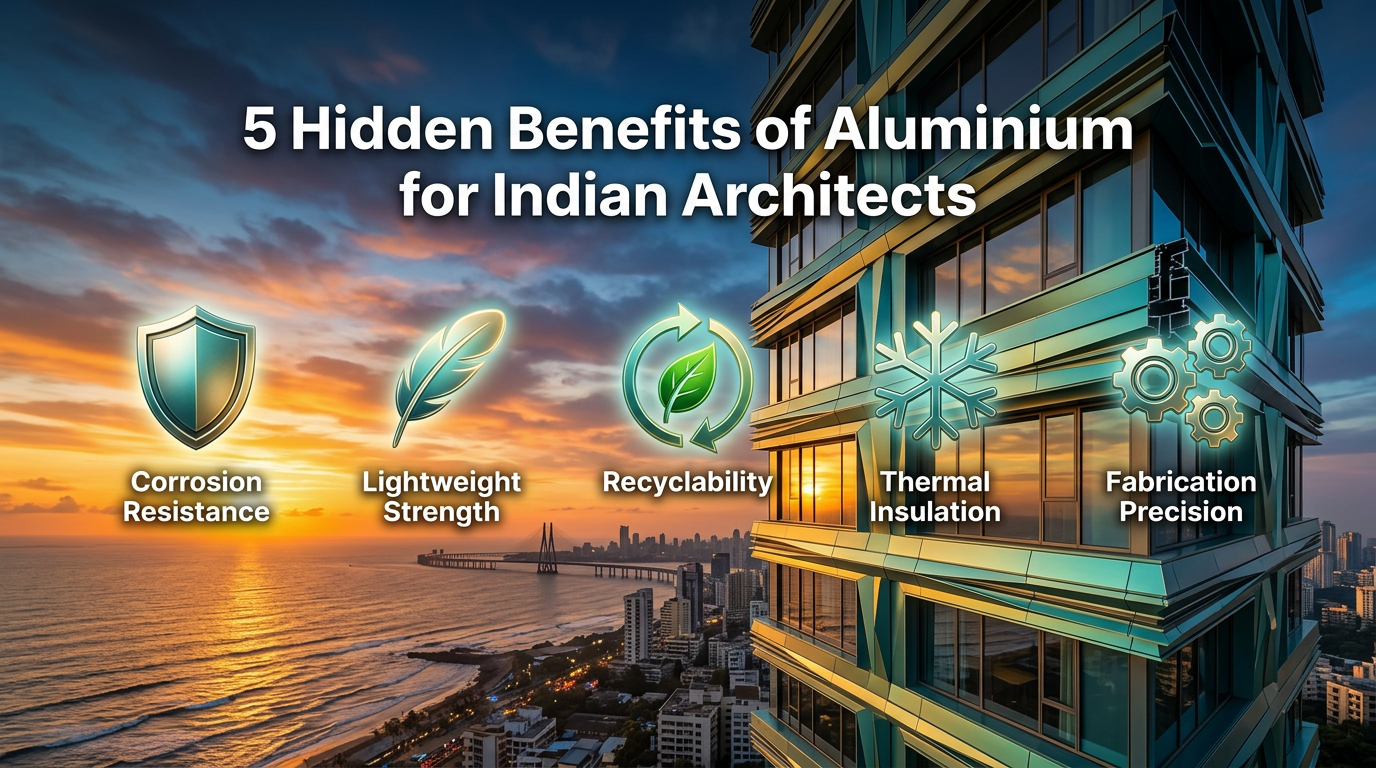
Aluminium has emerged as a game-changer in Indian architecture, blending lightweight strength with modern aesthetics. While steel and concrete dominate headlines, aluminium profiles offer unique advantages tailored to India’s diverse climates, seismic zones, and sustainability goals. This 800-word exploration uncovers five hidden benefits that savvy architects leverage for high-rise towers, coastal resorts, and green urban projects. Discover why aluminium extrusion, corrosion resistance, and thermal efficiency are redefining construction.
Benefit 1: Unmatched Corrosion Resistance in Coastal and Humid Zones
India’s 7,500+ km coastline—from Mumbai’s monsoons to Chennai’s salty air—poses brutal challenges for building materials. Aluminium’s natural oxide layer provides superior corrosion resistance, preventing rust without costly coatings. Unlike steel, which demands galvanization and frequent repainting, high-strength aluminium withstands humidity, salt spray, and pollution for decades.
In projects like the Statue of Unity or Goa beachfront villas, architects specify marine-grade aluminium extrusions to ensure longevity. This reduces lifecycle maintenance by 40-50%, slashing costs over 20-30 years. For Indian architects, it’s a hidden edge: no more callbacks for pitting or flaking, just enduring facades that preserve structural integrity amid cyclones and acid rain.
Benefit 2: Lightweight Design with High-Strength Performance
Weight matters in India’s seismic hotspots like the Himalayas and Northeast. Aluminium’s high strength-to-weight ratio—about one-third steel’s density—lightens loads on foundations, cutting concrete use by 20-30%. This translates to faster erection times and lower seismic risks, complying with NBC 2016 standards.
Consider Delhi’s high-rises: lightweight aluminium profiles enable taller spans without bulky supports, optimizing floor space. Fabrication flexibility allows custom angles for earthquake-resistant frames, while recyclability appeals to budget-conscious developers. Architects gain a secret weapon: designs that are agile, economical, and resilient, perfect for rapid urbanization.
Benefit 3: Natural Thermal Insulation for Energy Efficiency
With India’s sweltering summers hitting 45°C, cooling costs devour 50% of building energy. Aluminium’s low thermal conductivity—paired with modern thermal break profiles—excels here, blocking heat transfer better than raw steel. Anodized finishes reflect up to 80% solar radiation, reducing AC reliance by 15-25%.
In green-rated projects like IGBC-certified offices in Bengaluru, architects integrate insulated aluminium windows for passive cooling. This hidden perk aligns with ECBC norms, earning LEED points and utility rebates. Result? Lower operational costs and cooler interiors without bulky insulation layers—ideal for sustainable architecture in a warming nation.
Benefit 4: 100% Recyclability and Sustainability Edge
Sustainability isn’t optional; it’s mandated by RERA and rising ESG demands. Aluminium is infinitely recyclable with just 5% of virgin energy input, retaining 95% properties. India’s aluminium recycling rate is climbing, supporting Swachh Bharat and net-zero goals by 2070.
Architects specifying recyclable aluminium profiles for facades or partitions boost certifications like GRIHA. In Mumbai’s eco-townships, this means lighter carbon footprints and supplier incentives. The hidden benefit? Branding as forward-thinking pros while cutting embodied energy by 90% compared to composites—pure win for eco-conscious clients.
Benefit 5: Seamless Fabrication for Aesthetic Innovation
Aluminium extrusion enables limitless profiles—from slim partitions to intricate louvers—unmatched by rigid materials. Powder-coated finishes offer 200+ colors, resisting fading in UV-heavy India. This fabrication precision suits parametric designs in Jaipur heritage revamps or Hyderabad malls.
CNC machining delivers micron tolerances for clip-on systems, speeding installation by 30%. Architects unlock hidden creativity: curved canopies, perforated screens for ventilation, all with minimal waste. Durability ensures these statement pieces endure monsoons, elevating portfolios without compromising on precision engineering.
Why Indian Architects Should Prioritize Aluminium Now
From corrosion resistance to recyclability, aluminium’s hidden benefits address India’s unique challenges: monsoons, quakes, heatwaves, and green mandates. KMC Aluminium’s premium profiles exemplify this—offering tailored extrusions that blend strength, sustainability, and style.
Switching yields 20-40% lifecycle savings, faster builds, and happier clients. For architects eyeing the next boom in smart cities, aluminium isn’t just metal; it’s the future-proof choice. Choose KMC Aluminium, the trusted name in Tamil Nadu for over two decades – https://kmc.63.250.44.180.nip.io

Recent Comments