
Why Aluminium Extrusions are the Backbone of Modern Industrial Manufacturing
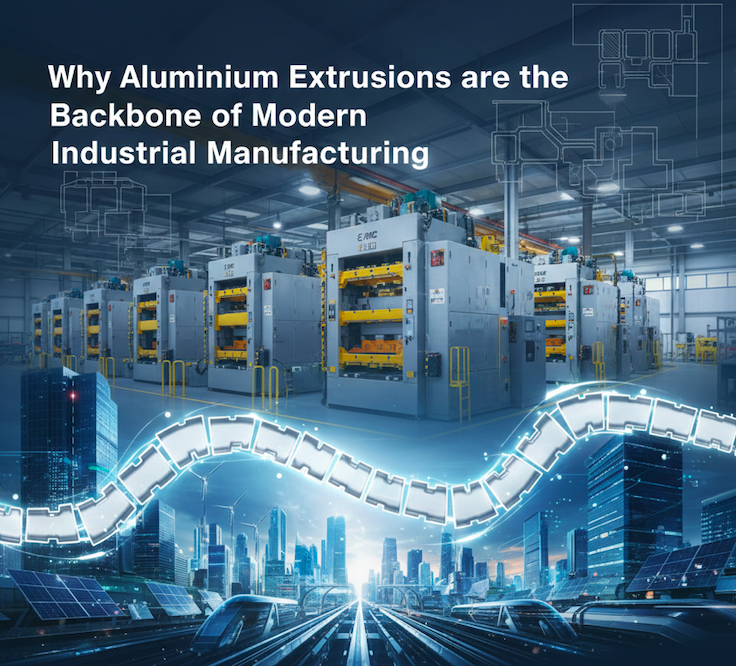
In today’s rapidly evolving industrial landscape, manufacturers are under constant pressure to build products that are lighter, stronger, more durable, and sustainable—without compromising on performance or design flexibility. This is where aluminium extrusions have emerged as a critical material across industries ranging from construction and infrastructure to automotive, electrical, and renewable energy.
At KMC Aluminium, precision-engineered aluminium extrusion solutions are developed to meet the demanding requirements of modern manufacturing while ensuring consistency, quality, and scalability.
What Are Aluminium Extrusions?
Aluminium extrusion is a manufacturing process in which aluminium alloy is forced through a specially designed die to create a uniform cross-section profile. This method allows manufacturers to produce complex shapes with high dimensional accuracy, making aluminium extrusions ideal for both functional and architectural applications.
Unlike traditional fabrication methods, extrusion offers:
- Greater design freedom
- Reduced material wastage
- High strength-to-weight ratio
- Excellent surface finish
These benefits make aluminium extrusions a preferred choice in industries where efficiency and precision are non-negotiable.
Key Advantages of Aluminium Extrusions
1. Lightweight Yet Structurally Strong
Aluminium offers exceptional strength while being significantly lighter than steel. This combination helps reduce overall structural weight, improves load efficiency, and lowers transportation and installation costs—especially crucial in infrastructure and automotive applications.
2. Superior Corrosion Resistance
Aluminium naturally forms an oxide layer that protects it from corrosion. When combined with surface treatments such as anodizing or powder coating, aluminium extrusions become highly resistant to harsh weather, moisture, and industrial environments.
3. Design Flexibility and Customization
Extrusion technology allows manufacturers to create custom aluminium profiles tailored to specific functional and aesthetic needs. Integrated channels, grooves, and cavities can be designed into a single profile, reducing the need for secondary machining or assembly.
4. Cost-Effective Manufacturing
By combining multiple functions into a single extruded profile, manufacturers can reduce material usage, machining time, and assembly costs—making aluminium extrusions both economical and efficient.
Applications of Aluminium Extrusions Across Industries
Construction & Infrastructure
Aluminium extrusions are widely used in:
- Window and door systems
- Curtain walls and façades
- Railings and structural frames
Their durability, clean finish, and low maintenance requirements make them ideal for long-term architectural applications.
Electrical & Electronics
In electrical systems, aluminium extrusions are used for:
- Cable trays
- Busbars
- Heat sinks
Aluminium’s excellent thermal conductivity and electrical performance make it a reliable choice for power distribution and thermal management.
Automotive & Transportation
To meet fuel efficiency and emission norms, automotive manufacturers increasingly rely on aluminium extrusions for:
- Structural components
- Chassis parts
- EV battery enclosures
Lightweight aluminium helps improve energy efficiency without compromising safety.
Renewable Energy & Solar Structures
With the growth of renewable energy, aluminium extrusions play a key role in:
- Solar panel mounting structures
- Support frames for renewable installations
Their corrosion resistance and strength ensure long service life in outdoor conditions.
Quality and Precision in Aluminium Extrusion Manufacturing
High-quality aluminium extrusion is not just about the material—it depends on process control, tooling precision, and metallurgical expertise. From billet selection and die design to extrusion, heat treatment, and finishing, every stage must be carefully managed.
Manufacturers that focus on:
- Tight dimensional tolerances
- Consistent alloy composition
- Advanced quality testing
are able to deliver aluminium profiles that perform reliably across demanding applications.
Sustainability: A Core Advantage of Aluminium
Aluminium is 100% recyclable without any loss of properties. Recycling aluminium consumes significantly less energy compared to primary production, making it one of the most sustainable industrial materials available today.
By choosing aluminium extrusions, industries contribute to:
- Lower carbon emissions
- Reduced material waste
- Long-term environmental responsibility
This aligns perfectly with global sustainability goals and green building standards.
Choosing the Right Aluminium Extrusion Partner
Selecting the right extrusion manufacturer is critical for long-term success. Key factors to consider include:
- Ability to deliver custom aluminium extrusion profiles
- Strong quality assurance systems
- Consistent production capacity
- Industry experience and technical support
A reliable partner ensures not just supply, but also engineering collaboration, process optimization, and dependable timelines.
The Future of Aluminium Extrusions in Industry
As industries move toward lightweight design, modular construction, electric mobility, and sustainable infrastructure, aluminium extrusions will continue to play a pivotal role. Advances in alloy development, automation, and surface finishing will further expand their applications.
From smart cities to renewable energy projects, aluminium extrusion solutions are shaping the future of industrial manufacturing.
Conclusion
Aluminium extrusions are more than just components—they are enablers of innovation, efficiency, and sustainability. With their unmatched versatility and performance, they remain a cornerstone material for industries aiming to build smarter and stronger products.
For businesses looking to integrate high-quality aluminium extrusion solutions into their projects, partnering with an experienced and quality-driven manufacturer such as KMC Aluminium makes all the difference.

Recent Comments